Why invisible charge matters
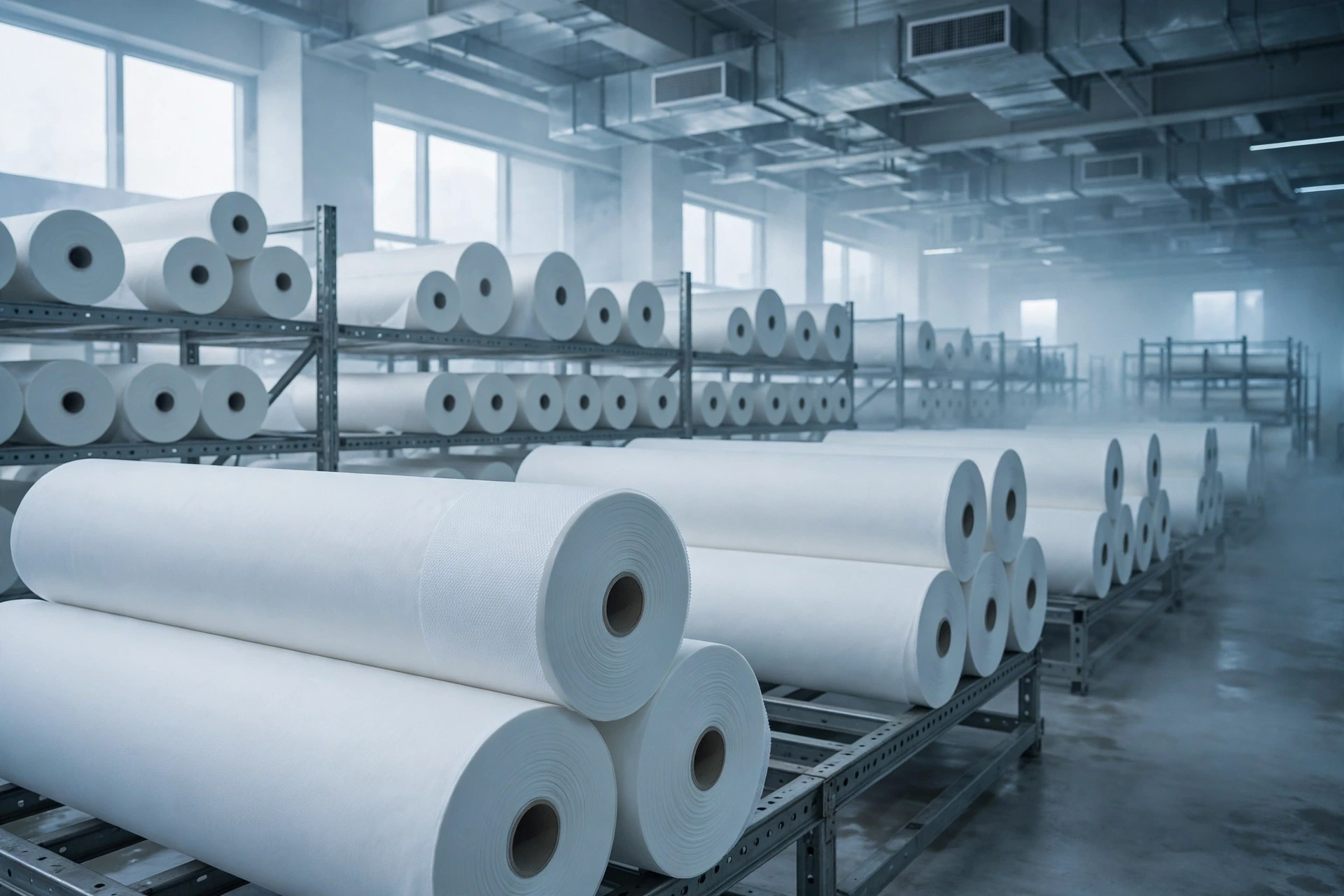
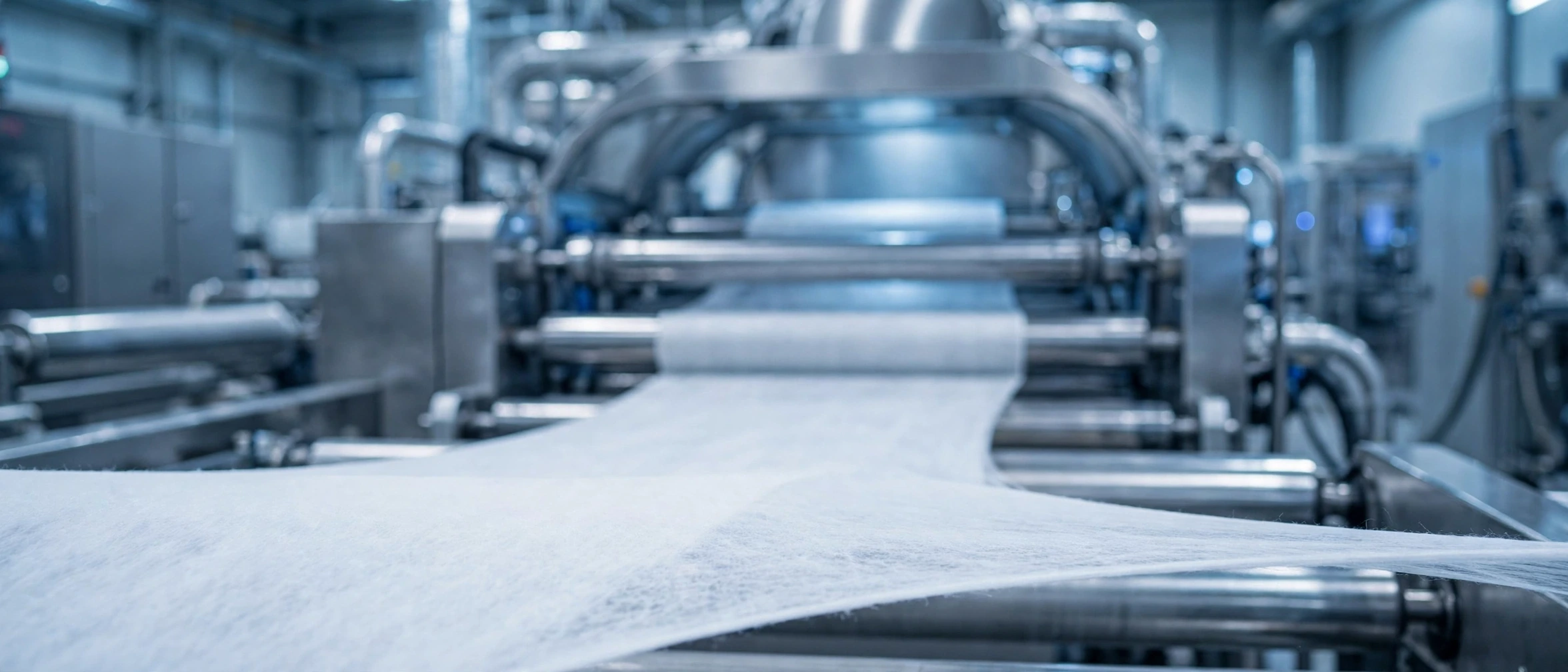
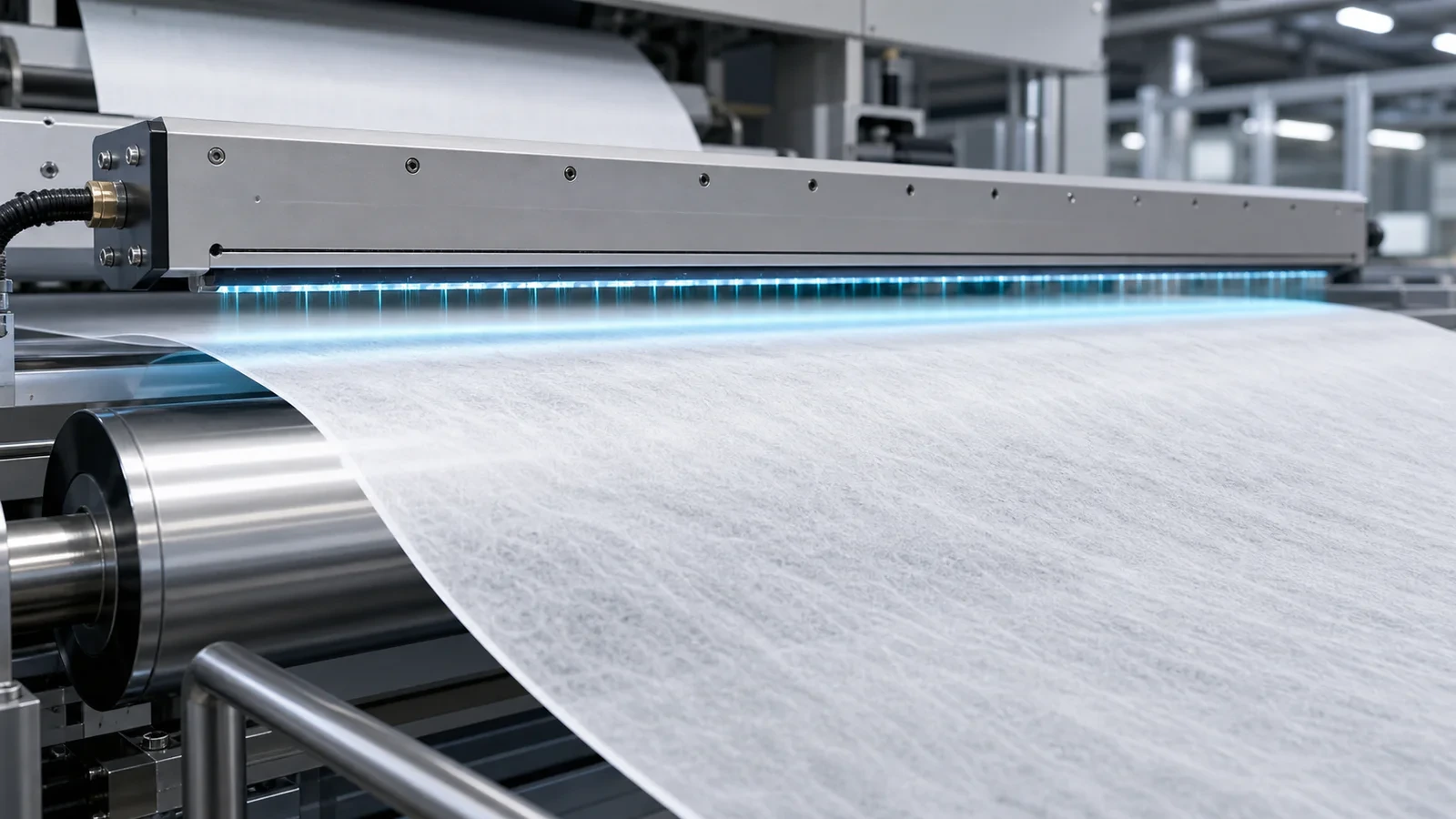
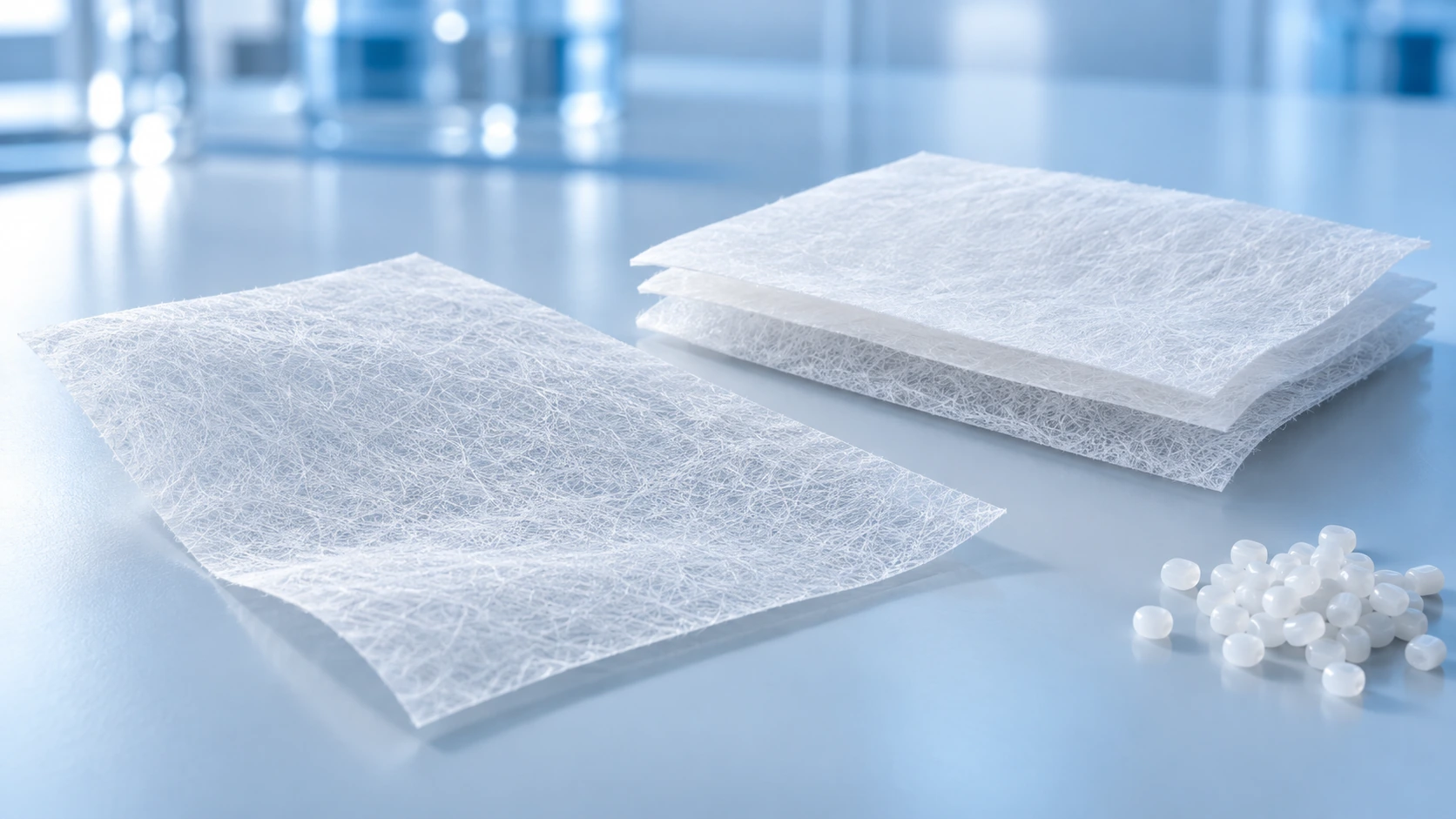
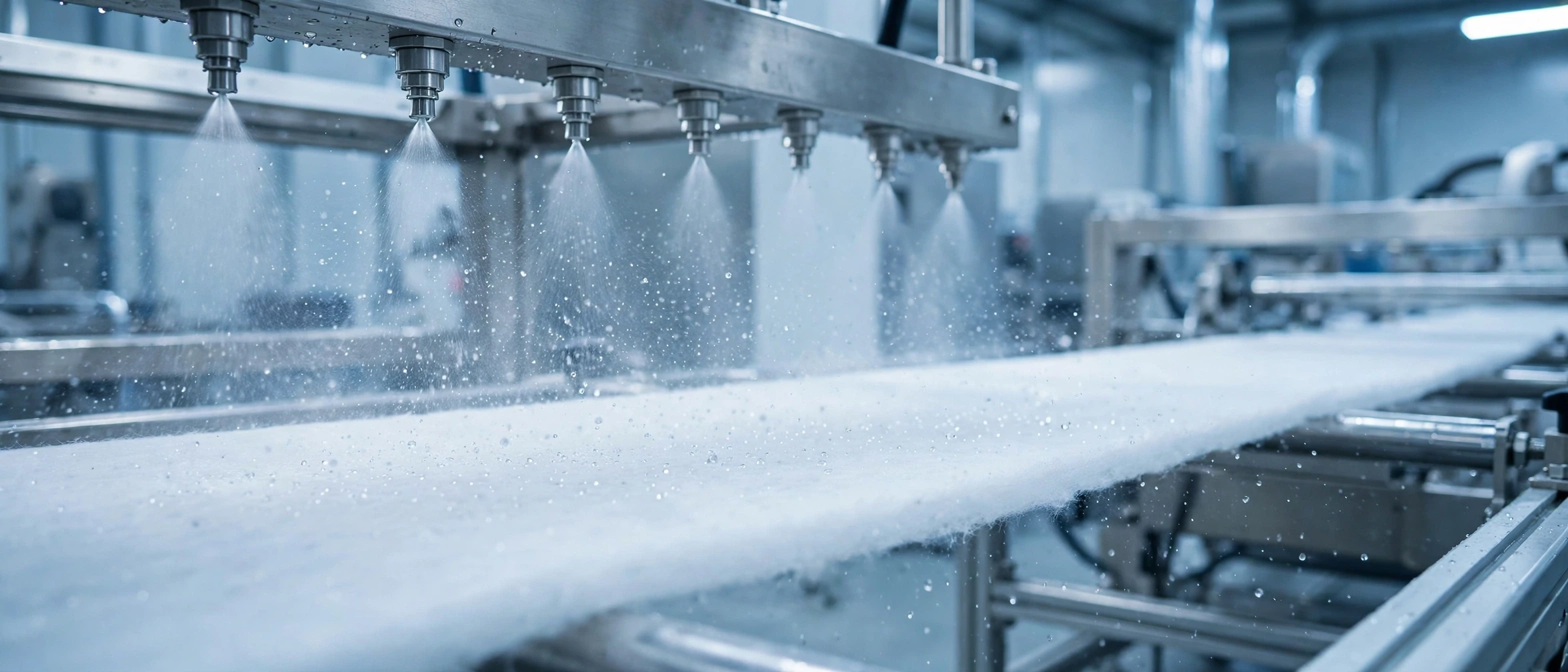
PP electret meltblown combines a fibrous structure with electrostatic particle capture. In water charging, water interacts with the web and is then removed. The dried media can retain charge that contributes to filtration.
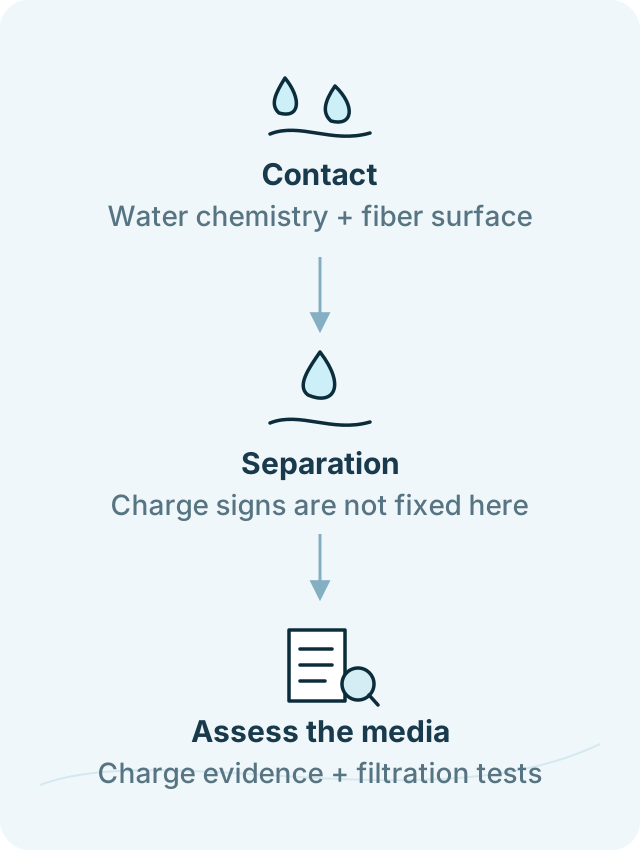
This process is often described as triboelectric charging or liquid–solid contact electrification. A rubbed balloon is a useful starting analogy, but the analogy does not identify the charge carriers or prove how a particular production line charges every fiber.
What contact electrification means
Contact electrification describes charge appearing or separating when materials interact and separate. Friction can accompany the contact, but rubbing is not a requirement for every case.
At liquid–solid interfaces, a simple electron-only explanation is too narrow. One experimental study found both electron and ion contributions, with their relative contribution affected by the tested liquid and surface conditions. A separate study on water and hydrophobic capillaries proposed an electrical-double-layer explanation for its droplet charging observations. These are studies of specific interfaces, not a universal recipe for a meltblown line. Lin et al., Nature Communications, 2020, Nauruzbayeva et al., Nature Communications, 2020.
The practical explanation is therefore conditional: water contact and separation can leave electrical charge on a polymer web, while the charge amount, sign and distribution depend on the material and process. A triboelectric-series chart alone cannot predict the finished web’s performance.
What the cited meltblown experiment actually found
A 2022 Scientific Reports study investigated water-based charging of meltblown media containing an electret masterbatch. Its treated web showed positive and negative charge regions. The paper also discussed other solid–liquid systems with a negatively charged solid; that discussion should not be substituted for the observations on its meltblown web. Triboelectric charging study.
An independent hydrocharging study likewise reported coexisting positive and negative charges in its PP meltblown samples. Taken together, these findings do not support the blanket statement that departing water is always positive and every PP fiber is left negative. Hydrocharging charge-characteristics study, 2022.
Neither paper establishes the charge distribution or filtration result of a Baibang grade. A drawing of charge signs must be identified as a conceptual model or tied to an actual measurement.
Why PP is useful — and why charge can still change
PP is a hydrophobic electrical insulator. Hydrophobicity can help water separate from a surface, and insulation limits conduction compared with a conductive material. Those properties make PP useful for electret media; they do not guarantee complete drying or permanent charge retention.
The resin and additives, fiber structure, charging history and later exposure influence charge storage. Research on thermally stimulated corona charging shows that charging and thermal treatment can change retention in PP webs. This is independent evidence that retention cannot be explained by polymer insulation alone. PP charge-stability study, Polymers, 2020.
Heat and moisture deserve attention, but the effect depends on the media and exposure. A corona-charged PP study measured changes under selected temperature and humidity treatments. Its findings are not a universal decay rate or a storage limit for water-charged media. Ask for evidence under the intended storage and conditioning conditions. Temperature-and-humidity study, Materials, 2020.
From charge to filtration: measure the full trade-off
Mechanical capture in a fibrous filter includes more than sieving through small pores. Particle motion and interactions with fibers also matter. Electrostatic forces add another capture mechanism, including interaction with charged particles and polarization of suitable uncharged particles.
Charge can improve capture without requiring a denser web. A corona-charged meltblown study found increased efficiency while pressure drop remained unchanged for its tested samples. That illustrates the benefit of electrostatic capture; it is not a promise that any water-charging treatment gives the same result. Corona-filter study, Polymers, 2021.
Do not infer a guaranteed lower basis weight, easier breathing or equal pressure drop from the word electret. Measure efficiency and pressure drop for the actual construction at the specified aerosol, flow, area and conditioning. A media result also does not establish a finished respirator rating or fit.
What to ask about the water-charging process
Use the mechanism as a guide to useful questions, rather than as proof of a supplier’s product. Water properties and drying conditions have been studied as process variables, but settings must be validated for the actual resin, additive system, web and equipment.
- Is the line water-only, corona-only or a combined charging system?
- Which resin and electret masterbatch are used, and what composition and end-use evidence is available?
- How are water quality, spray coverage and water removal controlled and recorded?
- How is drying verified for the actual web and line speed?
- What traceable efficiency and pressure-drop results are available before and after the agreed conditioning?
- If charge uniformity or polarity is claimed, what method and sampling map support that claim?
Prepare a useful technical inquiry
Share the PP grade and additive system, media construction, charging setup, target application and complete test conditions. Include the current baseline, conditioning requirement and storage history when relevant.
Baibang Materials can then discuss the application and evidence needed for a trial. Mechanism papers can help frame the discussion; actual grade documents and representative media tests must support the product decision.
Sources and method scope
- Wang et al., Scientific Reports (2022), triboelectric charging of meltblown — Publisher/PMC-indexed results and mechanism discussion checked. Contains masterbatch-modified media and both charge signs. Own meltblown observations differ from other models discussed in the paper. Direct page returned a browser check.
- Wang et al., Journal of Electrostatics (2022), hydrocharging characteristics — Publisher-indexed abstract and introduction read. Independent corroboration of coexisting charge signs and relevance of process conditions. Full paper not obtained.
- Lin et al., Nature Communications (2020), liquid–solid charge transfer — Publisher-indexed abstract and introduction read. Electron and ion contributions for studied interfaces; not a direct PP-meltblown process measurement.
- Nauruzbayeva et al., Nature Communications (2020), water–hydrophobe interfaces — Publisher-indexed abstract, methods and results excerpts read. Includes PP capillaries and condition-dependent charge observations; not a production meltblown apparatus.
- Zhang et al., Polymers (2020), PP charge stability — Publisher-indexed abstract/results read. Supports influence of charging/thermal history in studied PP samples; not a universal water-charging mechanism.
- Liu et al., Materials (2020), temperature and humidity — Original paper indexed abstract/results read. Corona-charged PP media and selected laboratory exposures; no water-media decay rate or storage limit inferred.
- Zhang et al., Polymers (2021), corona-charged filtration — Publisher-indexed test methods/results read. Supports conditional efficiency improvement without pressure-drop change and electrostatic capture explanation for tested webs.
The articles cited are background research, not Baibang lot data or certification.