Choose an intervention after defining the problem
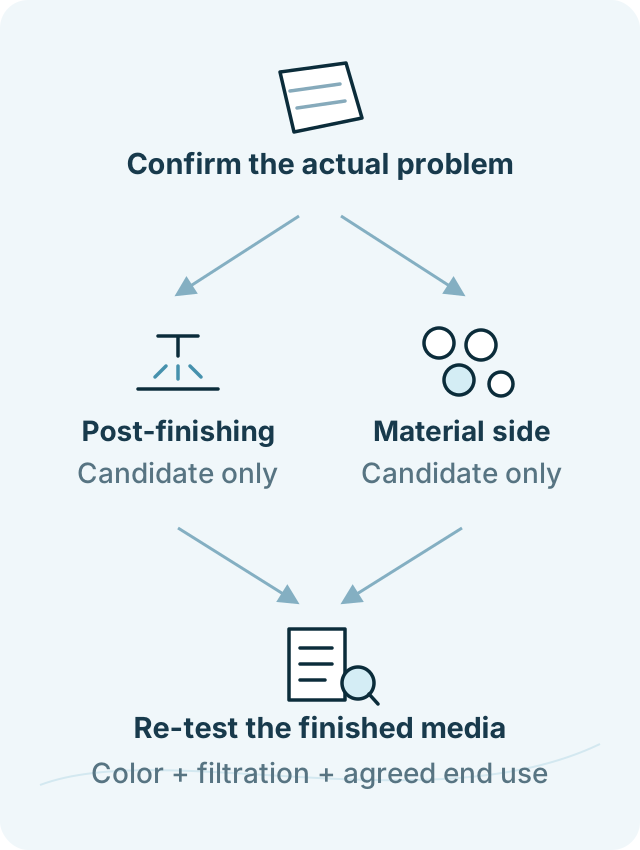
A yellowing complaint does not identify the correction to buy. First document the material, processing and exposure history, then investigate the plausible cause. A visual pattern alone cannot select a finishing treatment or a resin change.
Applied finishing and upstream material changes are different interventions. Packaging and storage controls are a separate group that may still be needed with either. None of these categories guarantees a correction, and a combination may be appropriate once the evidence is understood.
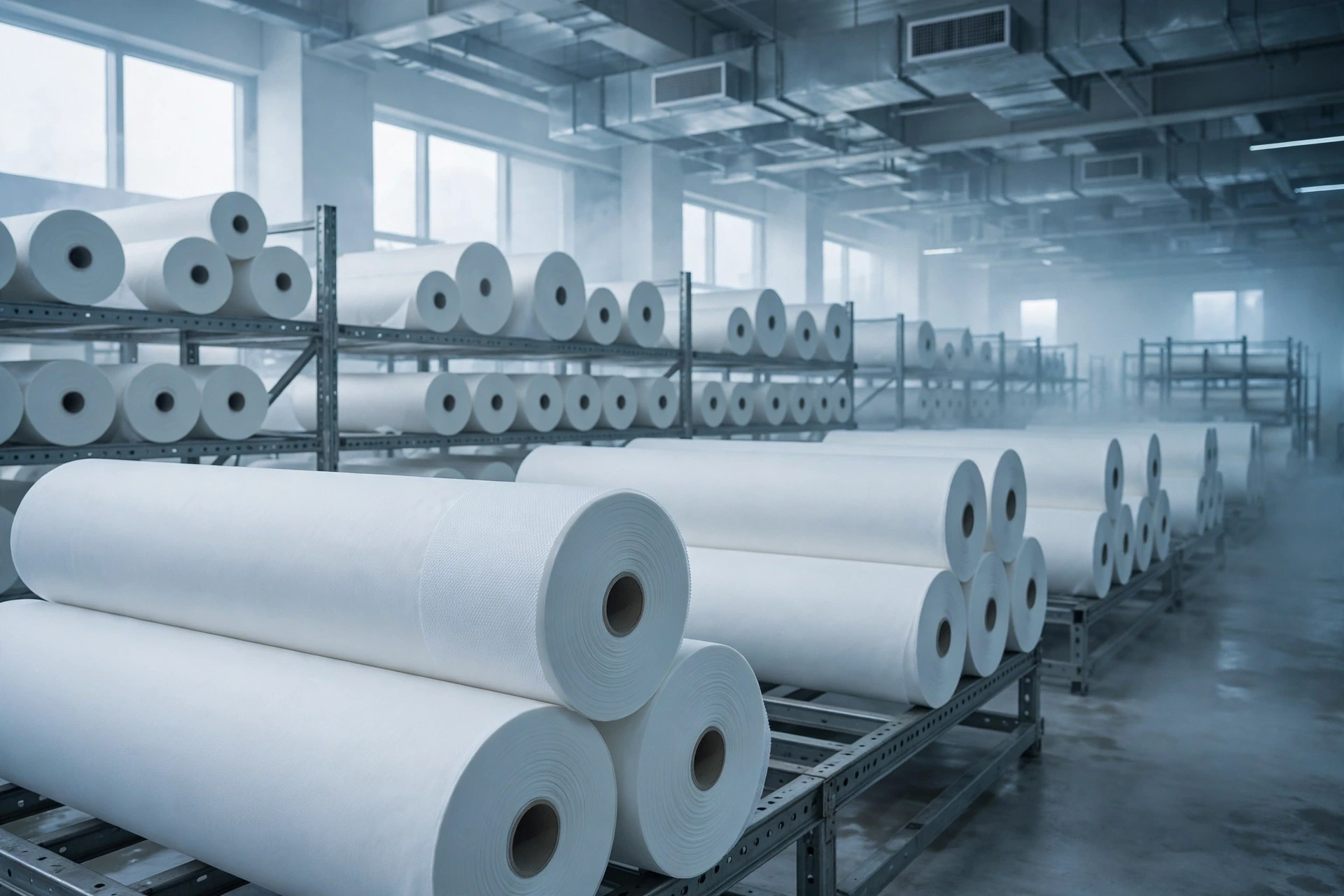
Packaging and storage controls are not a coating
Review the actual wrapping film, tapes and liners, along with storage exposures and handling records. Where evidence identifies an avoidable source or exposure, changing it may reduce further risk for existing and future stock.
Do not assume repackaging removes colored products already formed in the web or restores its original appearance. Nor does BHT-free packaging rule out all yellowing mechanisms or make storage controls unnecessary. Keep retained samples and evaluate the outcome under defined conditions.
Do not describe a wrapper change as proof that an after-finishing chemistry worked. The intervention and the conclusion must match the evidence.
Applied finishing: a process that needs its own validation
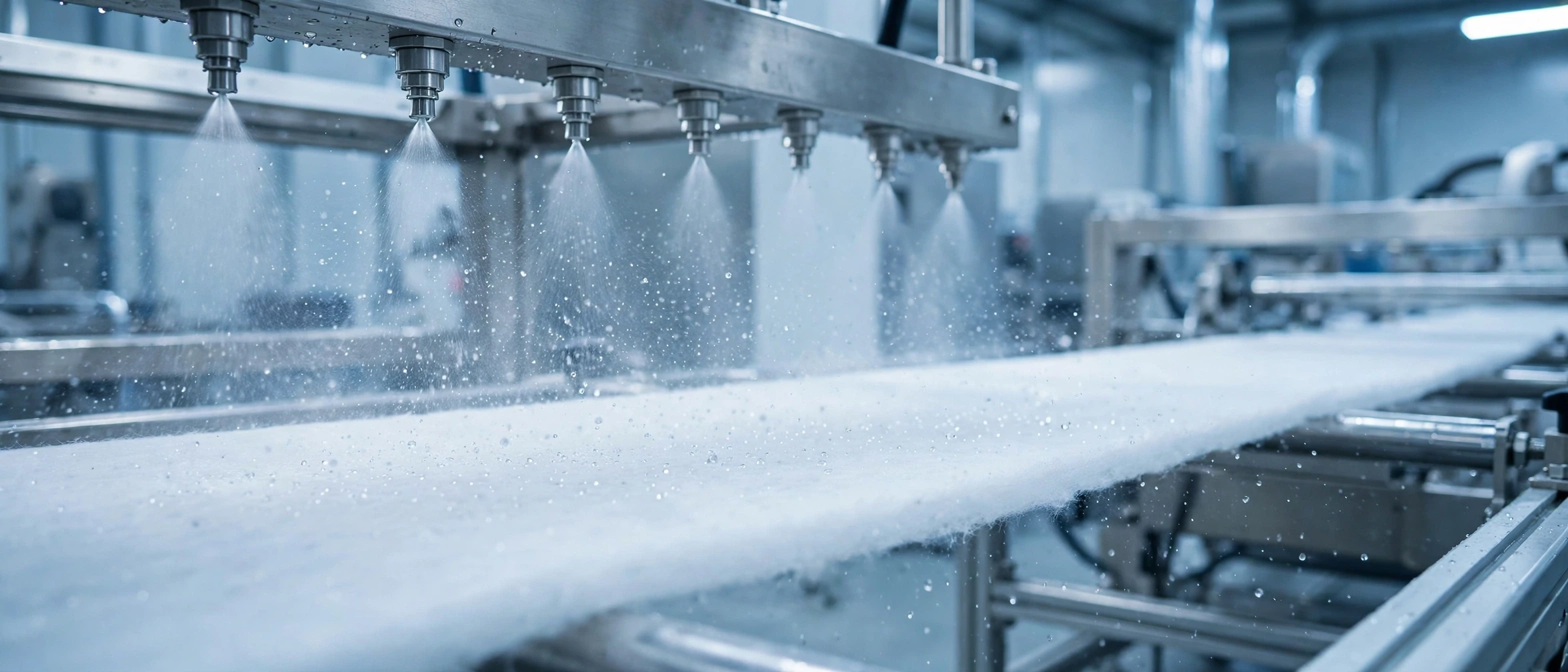
A finish deliberately applies chemistry to an already formed web. Its usefulness depends on the substrate, chemistry, application and drying process, targeted mechanism and end use. Evidence from another textile or an uncharged nonwoven is not sufficient to recommend a treatment for charged PP meltblown filter media.
Do not assume that spraying the outside of a wound roll treats its inner layers uniformly. Any proposed finishing process needs defined application conditions, sampling across the web and through relevant roll positions, and evidence of acceptable residues and finished-product behavior.
Some liquid or solvent exposures have reduced charge-related filtration performance in studied PP electret fabrics. Different treatments can behave differently. This supports checking the actual finish and media; it does not prove that all coatings damage filtration or that a particular coating is compatible.
A finish also does not automatically reverse discoloration. Existing stock should be assessed against its agreed requirements before any rework decision.
Material changes: upstream control with downstream consequences
The material route reviews the resin grade, stabilization system, additive inputs and processing history before production. Depending on the identified mechanism, a supplier may evaluate a different stabilizer package or another controlled material change.
Phenol-free PP stabilization systems are documented by additive manufacturers. That establishes a category of options to discuss; it does not establish Baibang availability, a meltblown formulation or electret compatibility.
Changing a package can affect processing, web structure or charge behavior even when no finish is applied afterward. Incorporation in the polymer does not guarantee uniform dispersion, identical rolls, preserved filtration or protection throughout storage. Mixing, dosing, process control and finished-media validation still matter.
A resin change does not retrofit an already produced roll. Its potential benefit should be demonstrated on new production while packaging and relevant exposures are controlled.
Compare the options against the same requirements
Use a common acceptance plan for the baseline and each candidate. Agree the color assessment, the applicable test methods and the exposure relevance before comparing results. A phenolic-yellowing screen and a general aging trial answer different questions.
For filtration media, record the actual aerosol, flow and specimen conditions for filtration efficiency and pressure drop, plus any required conditioning or loading checks. Verify after the treatment or material change and after the relevant aging. Color evidence cannot substitute for filtration evidence.
- Existing stock: investigate and control the identified exposures, retain references, and assess conformity before rework.
- Proposed finish: require substrate-specific process and compatibility evidence; do not infer through-roll coverage.
- New production: compare documented material inputs and controlled processing against the retained baseline.
- Finished-roll purchasing: request traceable material, packaging and finished-media evidence rather than an undefined anti-yellowing label.
- Cost comparison: include trials, handling, yield, quality control and the consequences of an unsuccessful change; avoid assumed cost or speed advantages.
Five questions before a trial
The route is a working hypothesis until the chosen intervention meets the agreed requirements.
- What evidence supports the suspected mechanism, and which alternative causes remain open?
- Is the stock already produced, or can the material inputs still be changed?
- What exact chemistry or material grade and process will the supplier evaluate?
- What are the relevant packaging, exposure and aging conditions?
- Which color and finished-media requirements must be met, and what traceable baseline will be used?
Bring evidence to the application discussion
Share the intended use, resin and additive grades, production or stock status, packaging details, discoloration history and available test reports. Include the electret process and finished-media requirements where relevant.
Review any proposed grade or treatment using its applicable TDS and representative trial results. Product availability, color performance and electret compatibility need confirmation for the actual application.
Sources and method scope
- BASF — Irgastab FS 301 technical information — September 2021 manufacturer technical sheet retrieved as indexed text; direct PDF open failed. Describes a non-phenolic stabilizer system and PP fiber/nonwoven applications. Demonstrates alternatives exist; not evidence of Baibang supply or meltblown/electret suitability.
- Clariant — antioxidants for polymers — Manufacturer product page read 9 Oct 2026. Describes phenol-free stabilization for PP/polyolefins. Product claims are manufacturer statements, not independent validation or Baibang evidence.
- ISO 105-X18:2007 — phenolic-yellowing scope — Official public abstract read 9 Oct 2026; complete paid procedure not accessed. Scope assesses phenolic-yellowing potential and excludes other yellowing causes. Official page shows Published and stage 90.20 (under systematic review). Confirm the applicable edition with laboratory/buyer at use; undated lifecycle stage links are not evidence of withdrawal.
- Original research — solvent exposure and PP electret fabrics — 2014 Journal of Electrostatics original research (DOI 10.1016/j.elstat.2014.05.006); accessible publisher abstract reviewed, full text not accessed. Reports charge/filtration changes under tested solvent exposure. Does not establish compatibility or damage for every finish or for the user's media.
- Liao et al. — treatment effects on meltblown filtration — 2020 ACS Nano original study; publisher abstract/indexed record reviewed, full text access blocked. Different disinfection treatments behaved differently; this is supporting evidence to validate any actual treatment, not a finishing recipe or respirator reuse instruction.
- Original research — transformation products and colour in polyolefins — 1991 Polymer Degradation and Stability original research; accessible publisher abstract reviewed, full text not accessed. Studies quinoidal antioxidant oxidation products and color in PP/PE; does not diagnose stored meltblown or supply a practical concentration threshold.
No finish, additive recipe, rework method, storage lifetime or product performance is approved by this guide.